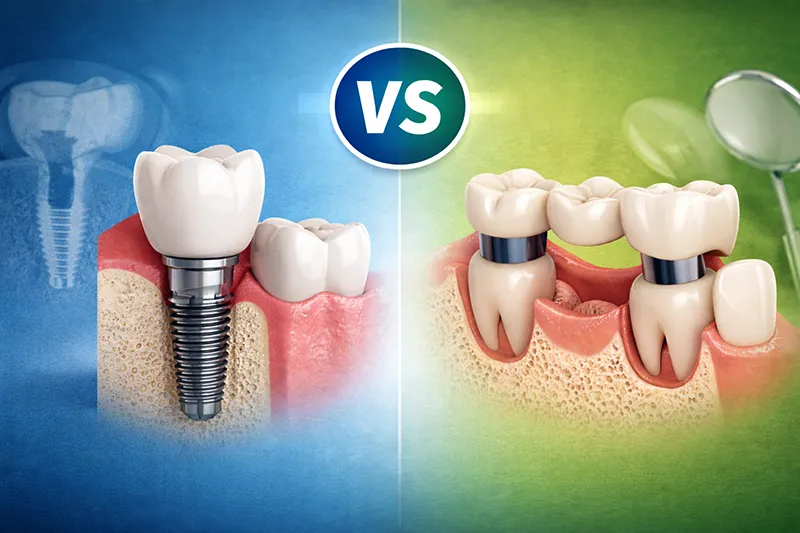
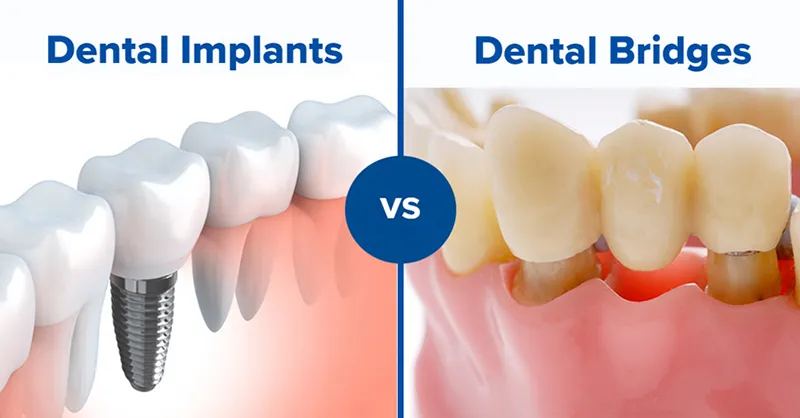
Have you ever wondered which option is better when you lose a tooth — a dental implant or a dental bridge? Many people feel confused because both are common ways to replace missing teeth, but they work very differently and have different benefits and limitations. Dental implants are a strong, long‑lasting solution that replace the tooth root by placing a post into the jawbone, while dental bridges fill the gap by using nearby healthy teeth for support. Each option has pros and cons depending on cost, time, and how long you want the replacement to last.
When choosing between implants and bridges, it helps to know the basics: implants usually look and feel more like natural teeth and can help protect jawbone health, but they cost more and take longer because surgery and healing are involved. Bridges can be made faster and often cost less, and they do not require surgery, but they may need replacing sooner and can affect the teeth next to the gap. Understanding these differences can help you make a smart decision for your smile and long‑term dental health.
Thinking about your options? Medexa Trip is a trusted health tourism company in Iran that can connect you with the best dentists in the country for free online consultations about dental implants and bridges. With expert advice from top Iranian dental specialists, you can get a personalized plan before you travel for treatment.
Which Is Better: Dental Implants or Bridges?
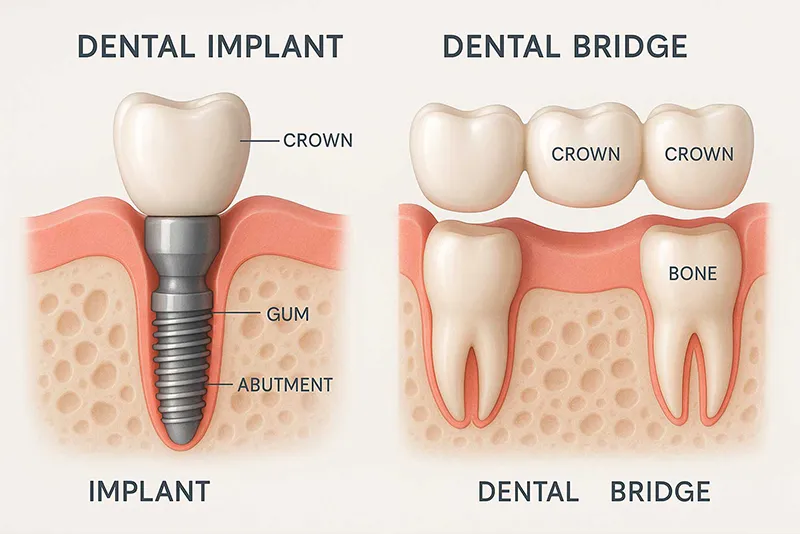
Deciding between dental implants and bridges depends on your teeth, budget, and long-term goals. Dental implants are placed directly into the jawbone, which makes them very strong and stable. They look and feel like natural teeth, and they do not affect nearby teeth. Implants are often recommended if you want a permanent solution and are willing to invest more time and money. Healing after implant surgery takes a few months, but the result can last 15–25 years or even longer with good care, making dental implants in Iran an excellent option for those seeking high-quality, long-lasting tooth replacement.
Dental bridges, on the other hand, use the teeth next to the gap for support. Bridges are faster to make and usually cost less than implants. They can look natural and work well, but they may put extra pressure on the supporting teeth and need replacement every 5–15 years. Bridges are a good choice if you want a quicker, less invasive option and don’t want surgery. Understanding these points helps you choose the right solution for your smile, comfort, and lifestyle.
| Feature | Dental Implants | Dental Bridges |
|---|---|---|
| Placement | Surgically inserted into the jawbone | Rest on adjacent teeth, no surgery into jawbone |
| Appearance | Looks and feels like natural teeth | Looks natural but may slightly differ from real teeth |
| Durability | 15–25+ years with proper care | 5–15 years, may need replacement sooner |
| Effect on Nearby Teeth | Does not affect adjacent teeth | Requires filing or support from neighboring teeth |
| Cost | Higher upfront cost | Lower initial cost |
| Procedure Time | Several months including healing | Usually a few weeks |
| Comfort | Feels like natural teeth, very stable | Comfortable but may feel different than real teeth |
| Oral Health | Helps prevent bone loss | Does not prevent bone loss in jaw |
| Maintenance | Brush, floss, regular dental visits | Brush, floss, clean under the bridge carefully |
Dental Implants vs Bridges: Key Differences
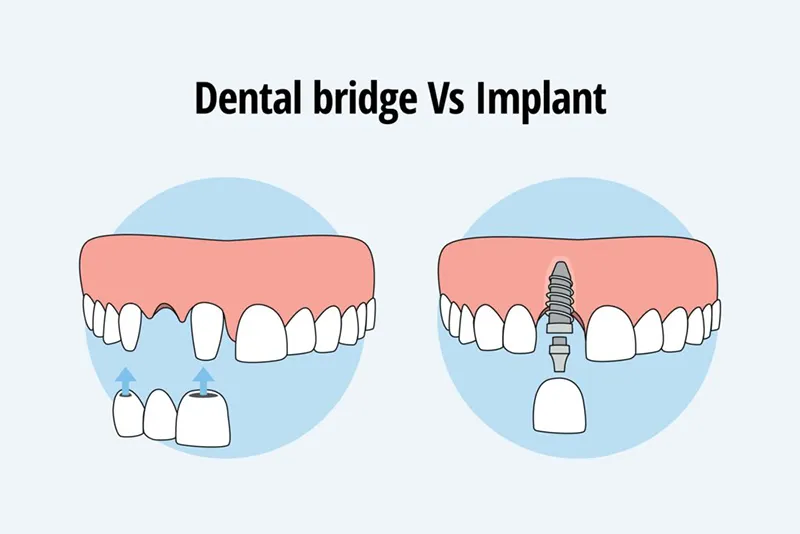
Dental implants and bridges are both effective ways to replace missing teeth, but they differ in structure, longevity, and impact on surrounding teeth. Implants are surgically placed into the jawbone, making them strong, long-lasting, and independent of nearby teeth. Bridges, however, rely on the adjacent teeth for support, are quicker to place, and usually cost less, but they may affect those supporting teeth over time. Knowing these differences helps you choose the best option for your dental health, budget, and lifestyle.
Key Points to Remember:
- Placement: Implants go into the jawbone; bridges rest on neighboring teeth.
- Longevity: Implants can last 15–25+ years; bridges usually last 5–15 years.
- Impact on Nearby Teeth: Implants do not affect other teeth; bridges may require filing of healthy teeth.
- Cost: Implants have a higher upfront cost; bridges are less expensive initially.
- Procedure Time: Implants require surgery and healing over months; bridges are faster to place.
- Oral Health Benefits: Implants help prevent bone loss; bridges do not.
- Comfort & Stability: Implants feel like natural teeth; bridges are comfortable but slightly less stable.
Dental Implants vs Bridges: Which Lasts Longer?
Dental implants generally last much longer than bridges because they are anchored directly into the jawbone, providing stability and strength similar to natural teeth. Bridges, while effective, rely on neighboring teeth for support and may wear down over time, requiring replacement sooner. The longevity of each option also depends on oral hygiene, regular dental check-ups, and lifestyle habits like avoiding hard or sticky foods.
- Implants: Can last 15–25+ years with proper care.
- Bridges: Typically last 5–15 years before needing replacement.
- Maintenance: Both require daily brushing and flossing; implants may need occasional professional cleaning around the post.
- Bone Health: Implants help maintain jawbone density, extending their lifespan.
- Wear and Tear: Bridges may stress supporting teeth, reducing their long-term durability.
Our Services: Root Canal Treatment in Iran
Who Is a Good Candidate for Implants vs Bridges?
Choosing between dental implants and bridges depends on your oral health, bone structure, and personal preferences. Implants are ideal for those seeking a long-lasting, natural-feeling solution, while bridges may be better for patients who want a quicker, less invasive option or have limitations that prevent surgery.
Good Candidates for Dental Implants:
- Adults with healthy gums and sufficient jawbone
- Patients looking for a permanent tooth replacement
- People who want to protect neighboring teeth from stress
- Those willing to undergo minor surgery and healing time
Good Candidates for Dental Bridges:
- Patients with one or more missing teeth but strong adjacent teeth
- Individuals seeking a faster, non-surgical solution
- People with limited jawbone density that cannot support implants
- Those preferring a lower upfront cost option
Dental Implants vs Bridges: Pros and Cons
Both dental implants and bridges offer effective ways to replace missing teeth, but each has advantages and disadvantages. Implants provide a permanent, natural-feeling solution, while bridges are faster and less invasive. Understanding the pros and cons helps you make the right choice for your needs.
Dental Implants – Pros:
- Long-lasting (15–25+ years)
- Look and feel like natural teeth
- Protect jawbone health
- Do not affect neighboring teeth
Dental Implants – Cons:
- Higher upfront cost
- Requires surgery and healing time
- Not suitable for patients with insufficient bone or certain health conditions
Dental Bridges – Pros:
- Faster treatment with no surgery
- Lower initial cost than implants
- Can replace one or multiple teeth at once
Dental Bridges – Cons:
- Shorter lifespan (5–15 years)
- Requires support from adjacent teeth
- Does not prevent bone loss in the jaw
- May need replacement or adjustment over time
Dental Health Impact: Implants vs Bridges
Dental implants help maintain overall oral health by preserving the jawbone and preventing bone loss that can occur after tooth loss. Because implants are anchored directly into the bone, they provide stability and support that mimics natural teeth, reducing stress on surrounding teeth and helping maintain proper bite alignment. This also makes it easier to clean around the implant, lowering the risk of gum disease and decay.
Bridges, while effective at filling gaps, rely on adjacent teeth for support, which can place extra pressure on those teeth over time. This may lead to wear, damage, or increased risk of cavities in the supporting teeth. Bridges do not prevent bone loss in the area of the missing tooth, which can affect long-term oral structure and facial appearance. Regular dental care and proper hygiene are essential to keep bridges functioning well and protect the health of surrounding teeth.
Cost Comparison: Dental Implants vs Bridges
When comparing the cost of dental implants and bridges, it’s important to consider both the short‑term and long‑term expenses. Dental implants usually cost more upfront because they involve surgery, custom implants, and multiple appointments. However, implants tend to last longer and may require fewer replacements over time, which can make them more cost‑effective in the long run. Dental bridges typically have a lower initial cost and can be completed faster, but they may need to be replaced or repaired more often, especially if the supporting teeth are affected.
The total cost also varies based on the type of implant or bridge you choose, the materials used, and your individual dental needs. Talking with your dentist about your budget and treatment goals can help you decide which option provides better value for your situation.
| Cost Factor | Dental Implants | Dental Bridges |
|---|---|---|
| Initial Procedure Cost | Higher upfront cost | Lower upfront cost |
| Surgical Fees | Required | Not required |
| Replacement Frequency | Less frequent | More frequent |
| Long‑Term Value | Often more cost‑effective over time | May cost more over lifetime |
| Material Options | Implant + crown | Bridge framework + crowns |
| Additional Procedures | Bone graft or scans may be needed | Usually no additional surgical procedures |
Longevity Showdown: Implants vs Bridges
Dental implants are widely recognized for their long-lasting durability. Because they are anchored directly into the jawbone, they can function like natural teeth for 15–25 years or more with proper care. Implants resist decay and maintain bone health, making them a permanent solution for many patients. However, they require surgery and a healing period, which can take several months before the final crown is placed.
Bridges, while effective and quicker to place, generally have a shorter lifespan. They rely on adjacent teeth for support, which can cause extra stress and may lead to replacement or repair every 5–15 years. Bridges are a good solution when surgery is not an option or when patients prefer a faster, less invasive approach, but they require careful maintenance to extend their life.
Key Longevity Points:
- Dental Implants: 15–25+ years with good care
- Dental Bridges: 5–15 years before replacement or repair
- Maintenance Needs: Both require regular brushing, flossing, and dental check-ups
- Bone Health Impact: Implants preserve jawbone; bridges do not
- Durability Under Pressure: Implants handle chewing stress independently; bridges stress neighboring teeth
Pain and Recovery: Implants vs Bridges Compared
Dental implants involve minor surgery, so some pain, swelling, and discomfort are common during the first few days after the procedure. Recovery usually takes a few weeks, and the jawbone needs time to heal before the final crown can be placed. Most patients report that pain is manageable with over-the-counter medication, and the long-term benefits of implants often outweigh the temporary discomfort.
Bridges are less invasive and typically cause minimal pain, as they do not require surgery. Recovery is usually faster, often just a few days, and patients can return to normal eating and oral care routines quickly. However, bridges may cause some soreness in the supporting teeth, especially initially. “With Medexa Trip, you can get free online consultation about pain, recovery, and what to expect from dental implants or bridges in Iran, helping you make an informed choice before traveling,” says a Medexa Trip specialist.
Our Services: LASIK Eye Surgery in Iran
Aesthetic Differences: Dental Implants vs Bridges
Dental implants closely mimic the look and feel of natural teeth. Because each implant is custom-made and anchored into the jawbone, it blends seamlessly with surrounding teeth, providing a natural smile that is hard to distinguish from real teeth. Implants also help maintain the shape of the jaw and prevent the sunken appearance that can occur after tooth loss.
Bridges can also look natural, especially when high-quality materials are used. However, because bridges rely on adjacent teeth for support, slight differences in color, shape, or alignment may be noticeable over time. Bridges do not preserve the jawbone, so the area under the bridge may experience minor changes in appearance. Overall, implants generally offer the most lifelike and long-lasting aesthetic results.
For those looking to enhance their smile further, dental veneers in Iran offer a beautiful, custom-designed solution to improve the color, shape, and alignment of teeth. With the expert support of Medexa Trip, you can achieve your dream smile with the highest quality treatments at the best prices in Iran.
Success Rates Compared: Dental Implants vs Bridges
Dental implants generally have higher success rates than bridges due to their strong integration with the jawbone and long-term stability. Studies show that implants can achieve a success rate of over 95% when placed by experienced dentists and maintained properly. Bridges also have good success rates, typically around 85–90%, but they depend on the health of the supporting teeth and may need replacement sooner.
Key Success Points:
- Dental Implants: Over 95% success with proper care and placement
- Dental Bridges: 85–90% success, depends on supporting teeth
- Longevity Impact: Implants often last longer without needing major repairs
- Oral Health Contribution: Implants maintain bone and tissue health; bridges do not
- Maintenance Role: Regular check-ups increase success for both options
Maintenance Tips: Implants vs Bridges
- Dental Implants:
- Brush twice daily with a soft-bristled toothbrush
- Floss carefully around the implant and crown
- Use antimicrobial mouthwash if recommended
- Visit your dentist regularly for check-ups and professional cleaning
- Avoid chewing very hard foods directly on the implant
- Dental Bridges:
- Brush twice daily, paying attention to the bridge area
- Use floss threaders or special brushes to clean under the bridge
- Rinse with an antibacterial mouthwash if advised
- Regular dental visits for cleaning and inspection of supporting teeth
- Avoid sticky or hard foods that could loosen the bridge
Consultation for Choosing Between Dental Implants and Bridges
Are you unsure whether to choose dental implants or bridges to replace missing teeth? Each option has its advantages and limitations, and the best choice depends on your oral health, jaw structure, and budget. Implants provide a permanent, natural-feeling solution that preserves bone health, while bridges offer a faster, less invasive option that may be suitable if you want a quicker solution at a lower cost.
With Medexa Trip, a trusted health tourism company in Iran, you can get a free online consultation with the best dentists in Iran. Experts will evaluate your case, discuss the most suitable options for you, and create a personalized treatment plan before you start your journey, ensuring a safe and effective experience to improve your smile.
Choosing Between Implants and Bridges for a Missing Tooth
When deciding between dental implants and bridges, consider your oral health, budget, and long-term goals. Implants offer a permanent, natural-feeling solution that preserves jawbone health and does not affect adjacent teeth, making them ideal for those seeking a long-lasting option. Bridges provide a quicker, less invasive alternative that can restore your smile effectively, but they may put extra stress on neighboring teeth and generally need replacement sooner.
Each option has advantages depending on your situation, lifestyle, and preferences. For personalized guidance, you can get free online consultation with the best dental specialists in Iran through Medexa Trip, a trusted health tourism company, to help you choose the most suitable solution for your missing tooth.