Have you ever wondered why some noses look straight while others curve at the top? Do you know that there are many types of noses, and each one tells a story about family, region, and genetics? What if your nose shape could be improved to match your face better, with the help of the right surgeon?
Stay with us to read more about different types of noses.
Rhinoplasty Surgeons in Iran: Best Specialist for Your Nose Shape
Finding the right surgeon is the most important step for anyone who wants to change their nose shape. Iran is now one of the top countries for rhinoplasty, and many patients travel from Arab countries every year to work with Iranian surgeons. These doctors have deep experience with many types of noses, including Roman, Greek, Nubian, and East Asian nose shapes. Iran offers rhinoplasty surgeons in Iran who understand how to work with different skin types, bone structures, and cultural beauty standards.
Medical tourism in Iran is growing fast because of low cost, high skill, and modern hospitals. Patients from Saudi Arabia, Iraq, UAE, Kuwait, and other Arab countries choose Tehran for nose surgery because the results are natural and the surgeons are trained in international techniques. If you want the best rhinoplasty surgeon in Iran, look for a doctor with strong before-and-after photos, good communication, and full aftercare support.
Furthermore, understanding what sets a reliable Medical Tourism Company in Iran apart uncovers essential differences in patient support, treatment coordination, and overall experience that can dramatically influence the success of your medical journey.
Along the same lines, understanding Orthodontic in Iran reveals how correcting bite alignment influences oral health, comfort, and long-term dental stability beyond creating a straighter smile.
Most Common Nose Shapes Explained
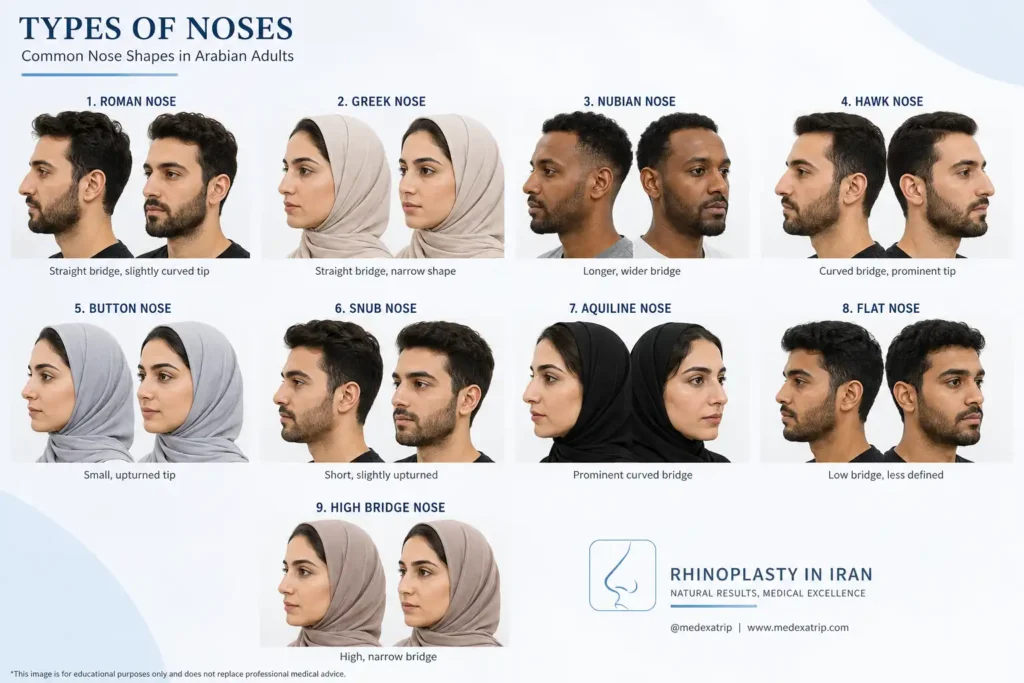
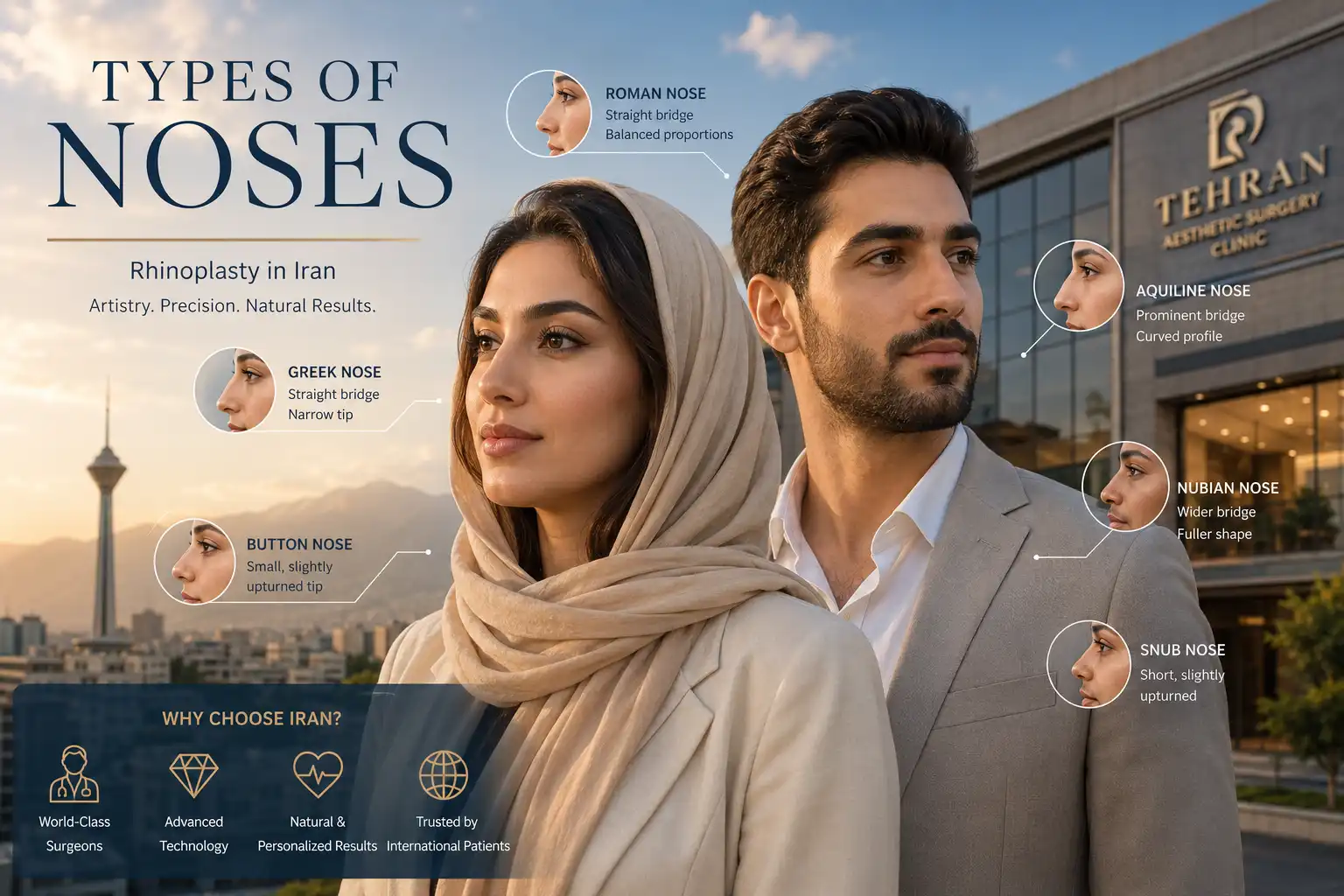
There are many common types of noses around the world, and each shape has its own character. The most common nose shapes include the Roman nose, Greek nose, Nubian nose, hawk nose, snub nose, button nose, and aquiline nose. Each of these shapes comes from a mix of genetics, ethnicity, and family history.
This nose shape guide helps people understand what makes their nose unique. Knowing your nose type can also help you talk with a rhinoplasty surgeon more clearly, because you can explain what look you like and what you want to change.
Also, for a deeper understanding, exploring Spine Surgery in Iran explains the conditions that truly require surgical intervention, separating them from problems that often respond to less invasive treatments.
How Nose Types Are Classified
Doctors and researchers classify nose types by looking at three main parts: the bridge, the tip, and the nostrils. The bridge can be straight, curved, or bumped. The tip can be rounded, pointed, or wide. The nostrils can be narrow or flared. This nose shape classification system helps surgeons plan the right rhinoplasty technique for each patient.
Ethnic background also plays a big role in how nose types are classified. For example, Middle Eastern and Mediterranean noses often have a defined bridge, while East Asian and African noses are often flatter and wider. Understanding these differences in types of noses is the first step before any nose surgery consultation.
To better understand this, comparing a Bony vs Fleshy Nose reveals why identical rhinoplasty techniques rarely produce the same outcome, helping you recognize which surgical approach is truly suited to your facial anatomy.
Common Types of Nose Shapes
Different nose shapes have unique features that contribute to a person’s overall facial appearance. While no nose shape is better than another, understanding their characteristics can help you describe your features or discuss your aesthetic goals with a plastic surgeon.
| Nose Type | Main Characteristics | Commonly Seen In | Overall Appearance |
|---|---|---|---|
| Roman Nose | Straight or slightly convex bridge, small hump, strong and defined tip | Mediterranean and Middle Eastern populations | Bold, classic, and well-defined facial profile |
| Greek Nose | Perfectly straight bridge, no hump, narrow and symmetrical shape | Southern European populations | Elegant, balanced, and refined appearance |
| Nubian Nose | Wide nasal base, low or flat bridge, rounded tip, wider nostrils | African and some Middle Eastern populations | Soft, rounded, and harmonious facial features |
| Hawk Nose | Prominent bridge, noticeable hump, downward-curving tip | Middle Eastern and South Asian populations | Sharp, distinctive, and striking profile |
| Snub Nose | Short nose, low bridge, slightly upturned and rounded tip | Found across many ethnic backgrounds | Youthful, soft, and friendly appearance |
| Button Nose | Small and compact, round tip, narrow nostrils, minimal bridge projection | Common in many populations | Delicate, cute, and well-balanced facial look |
| Aquiline Nose | Curved, beak-like bridge, prominent middle section, narrow tip | Middle Eastern, South Asian, and Mediterranean populations | Strong, elegant, and distinctive facial character |
As a natural next step, exploring Fleshy nose rhinoplasty in Iran explains why thicker nasal skin requires specialized planning, uncovering realistic expectations that many patients overlook before scheduling surgery.
East Asian Nose Characteristics
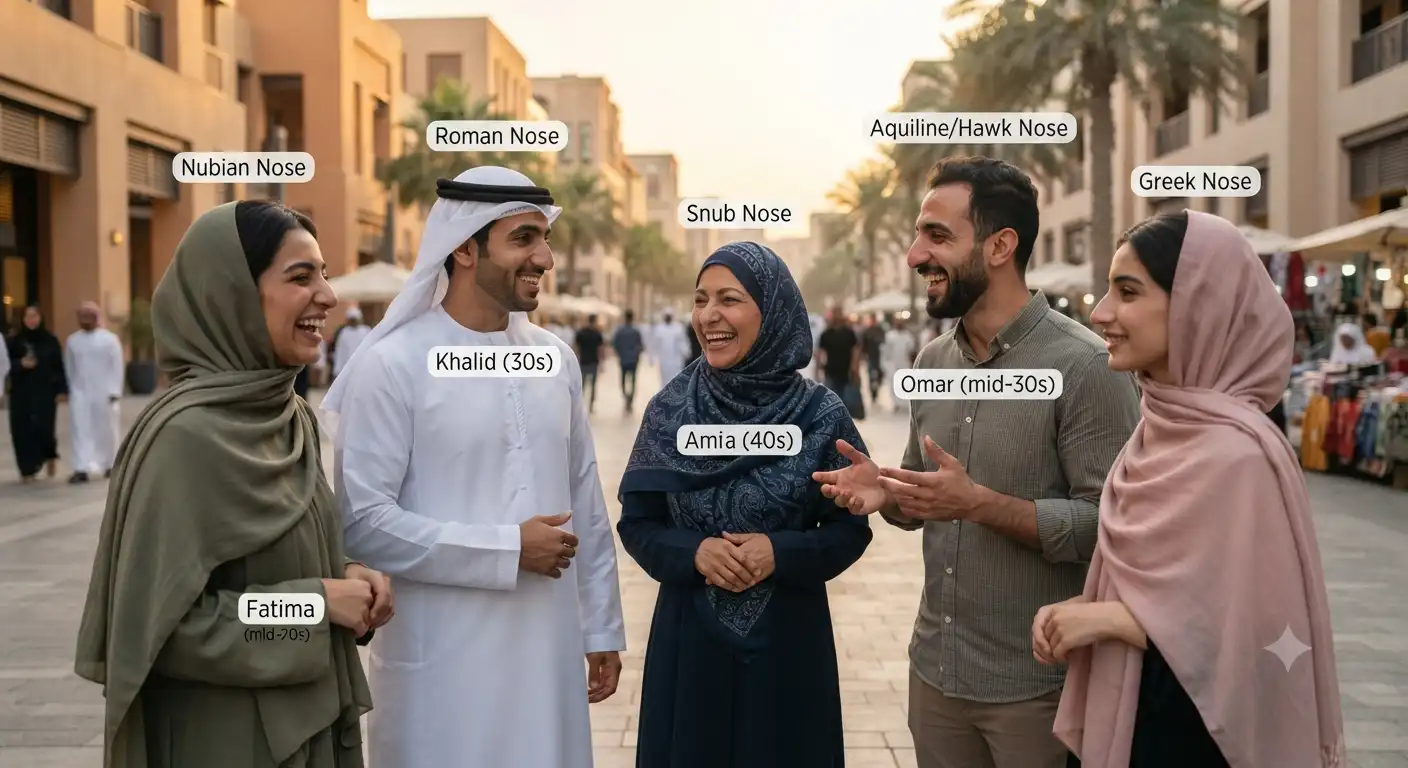
East Asian noses usually have a flatter bridge, wider nasal base, and a softer tip compared to Middle Eastern or European types of noses. This shape is common in China, Japan, Korea, and other East Asian countries, and it is closely connected to genetics and bone structure.
Bridge and Tip Structure
The bridge in East Asian noses is often lower, and the tip is usually rounder with less projection. Because of this, rhinoplasty for East Asian patients often focuses on adding height to the bridge using cartilage or implants, rather than reducing size like in other nose types.
To complete the picture, understanding when Glaucoma Surgery in Iran becomes necessary helps clarify treatment decisions that could significantly affect long-term vision preservation and overall eye health.
Flat Nose vs High Bridge Nose
Understanding the difference between a flat nose and a high bridge nose helps patients decide what kind of rhinoplasty result they want. Both shapes are natural and common, but they create very different facial impressions.
| Feature | Flat Nose | High Bridge Nose |
|---|---|---|
| Bridge Height | Low | High |
| Common Region | East Asia, Africa | Middle East, Europe |
| Facial Impression | Soft, rounded | Sharp, defined |
| Rhinoplasty Goal | Add height | Reduce or refine |
| Common Technique | Implant or graft | Bone/cartilage shaving |
More importantly, discovering Rhinoplasty in Iran uncovers why patients from around the world choose experienced Iranian surgeons for procedures that balance aesthetics with functional breathing improvements.
What Determines Your Nose Shape?
Your nose shape comes mainly from your genes, passed down from your parents and ancestors. Bone structure, cartilage strength, and skin thickness all work together to create the final shape of your nose.
Ethnic background, environment, and even climate over generations have shaped different types of noses around the world. For example, people from cold, dry climates often developed narrower noses to warm the air before it reaches the lungs.
Major Factors That Shape Your Nose:
- Genetics from both parents
- Ethnic and regional background
- Bone and cartilage structure
- Skin thickness
- Environmental adaptation over generations
Likewise, exploring Dental Veneers in Iran uncovers how smile design, material selection, and treatment planning combine to create results that look natural rather than noticeably artificial.
Can Your Nose Shape Change Over Time?
Yes, your nose can change slowly as you get older, even without surgery. This happens because cartilage keeps growing slightly throughout life, while skin and supporting tissue lose strength.
Natural Aging Changes
As people age, the tip of the nose may drop slightly, and the bridge can appear more prominent because facial fat decreases. This is a normal process and happens to almost everyone over time.
Other Influencing Factors
Injuries, past surgeries, and even long-term habits like sleeping position can affect nose shape. Weight changes can also slightly change how the nose looks, since fat and skin around the face shift over time.
In this context, comparing IVF in Iran & Iraq highlights meaningful differences in treatment quality, costs, and patient experience that can influence one of the most important healthcare decisions you’ll ever make.
Rhinoplasty for Different Types of Noses
Every nose type needs a different rhinoplasty approach, and this is why choosing an experienced surgeon matters so much. A good surgeon studies your specific nose shape before planning any changes.
Rhinoplasty for Roman and Aquiline Noses
For Roman and aquiline noses, surgeons usually focus on removing the bump and straightening the bridge, while keeping the natural strength of the profile.
Rhinoplasty for Nubian and East Asian Noses
For Nubian and East Asian nose types, the goal is often to add height to the bridge and refine the tip, using cartilage grafts or implants for a natural lift.
Rhinoplasty for Snub and Button Noses
For snub and button noses, surgeons focus on small refinements, such as adjusting the tip angle or slightly changing the nostril width, since these nose shapes are already compact.
| Nose Type | Common Goal | Typical Technique |
|---|---|---|
| Roman / Aquiline | Reduce bump, straighten bridge | Bone/cartilage shaving |
| Nubian / East Asian | Add height and definition | Cartilage graft, implant |
| Snub / Button | Fine tip adjustment | Tip reshaping |
| Hawk | Soften curve | Bridge and tip correction |
| Greek | Maintain straight profile | Minor refinement |
Medical tourism in Iran gives international patients access to skilled rhinoplasty surgeons at a much lower cost than Europe or the Gulf region, without lowering the quality of care. Many clinics in Tehran offer full packages, including hotel stays, transport, and translation support for Arab patients.
Building on this, understanding Root Canal Treatment in Iran dispels common misconceptions while explaining how preserving a natural tooth often provides advantages that extraction cannot easily replace.
Choosing the Right Nose Shape for Your Face
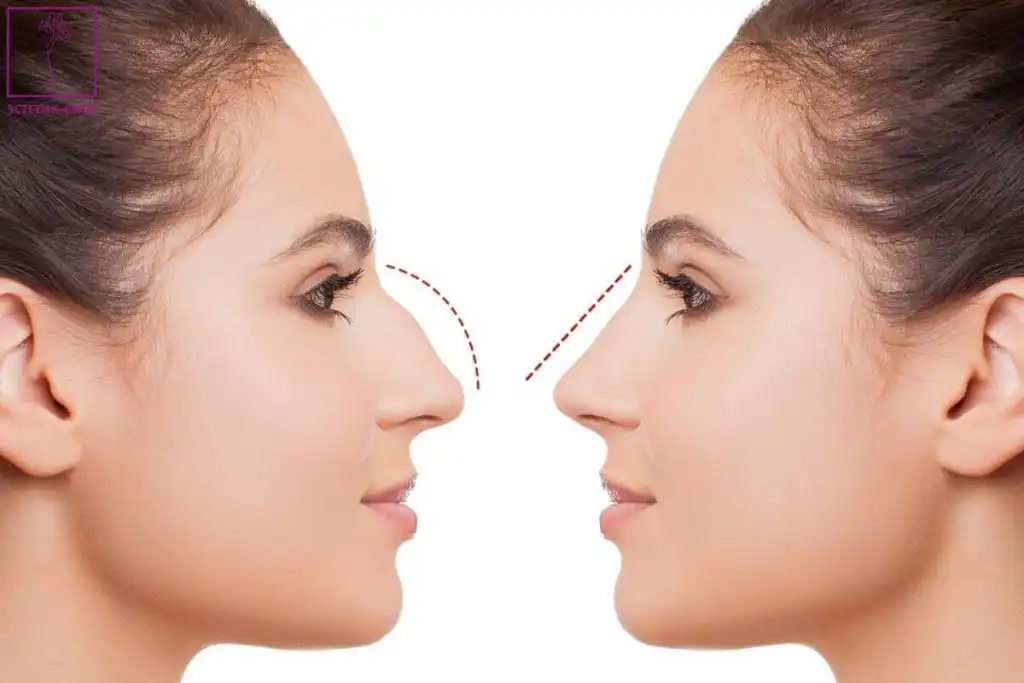
Choosing the best nose shape is not only about beauty trends; it should match your face size, skin type, and other features like your chin and cheekbones. A good rhinoplasty surgeon will guide you toward a shape that looks natural on your face, not just a copy of someone else’s nose.
Balance is the key idea here. A nose that works well for a narrow face may not suit a round or wide face, so personal consultation is always necessary before any decision.
Key Aesthetic Considerations:
- Overall face shape (round, oval, square, long)
- Size and position of the chin
- Skin thickness and texture
- Ethnic background and natural bone structure
- Desired look: natural vs more defined
In this context, learning about Eyelid Surgery in Iran reveals how subtle changes around the eyes can dramatically improve both appearance and, in some cases, everyday visual function.
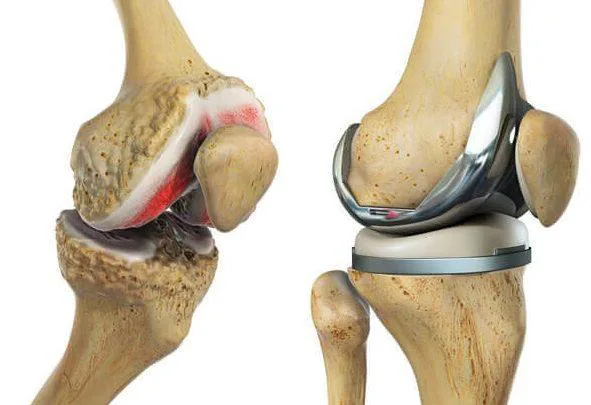
Likewise, reviewing Knee Replacement in Iran reveals the factors that influence recovery speed and long-term joint function, answering questions many patients wish they had asked sooner.
Frequently Asked Questions About Types of Noses
What are the main types of noses?
The main types of noses include Roman, Greek, Nubian, hawk, snub, button, and aquiline noses, each with different bridge and tip shapes.
Which nose type is most common in the Middle East?
The aquiline and Roman nose types are very common in the Middle East, usually with a defined bridge and strong profile.
Can rhinoplasty change my nose type completely?
Rhinoplasty can change the shape, size, and angle of your nose, but a skilled surgeon will usually keep some natural features so the result looks balanced with your face.
Is nose shape only determined by genetics?
Genetics is the main factor, but environment, aging, and injuries can also slightly change your nose shape over the years.
How long does rhinoplasty recovery take?
Most patients see initial results within two to three weeks, while full healing and final shape can take up to one year.
Why do many patients choose Iran for rhinoplasty?
Patients choose Iran because of experienced surgeons, modern clinics, natural-looking results, and much lower prices compared to Europe or the Gulf countries.
Does nose shape affect breathing?
Yes, some nose shapes, especially those with a deviated septum or very narrow nostrils, can affect breathing, and rhinoplasty can sometimes improve this along with appearance.
What should I bring to my first rhinoplasty consultation?
You should bring photos of nose shapes you like, a list of your medical history, and any questions about the surgeon’s experience with your specific nose type.
Furthermore, understanding Cancer Treatment in Iran provides valuable insight into available therapies, multidisciplinary care, and treatment planning that can make complex medical decisions far more informed.
Summary: Understanding Different Types of Noses
Understanding the many types of noses helps patients make better decisions when considering rhinoplasty. Each nose shape, from Roman to Nubian to East Asian, comes with its own features and its own best surgical approach.
| Nose Type | Key Feature | Common Region |
|---|---|---|
| Roman | Straight bridge with small bump | Mediterranean, Middle East |
| Greek | Perfectly straight line | Southern Europe |
| Nubian | Wide base, flat bridge | Africa, Middle East |
| Hawk | Curved, downward tip | Middle East, South Asia |
| Snub | Short, upturned tip | Worldwide |
| Button | Small and round | Worldwide |
| Aquiline | Curved, beak-like bridge | Middle East, Mediterranean |
This becomes even clearer when examining LASIK Eye Surgery in Iran, where understanding candidacy, recovery expectations, and long-term vision improvements can completely reshape how you evaluate laser vision correction.
Best Rhinoplasty Clinics in Iran for Different Types of Noses
Iran has become a leading destination for rhinoplasty because of its combination of skilled surgeons, modern equipment, and affordable prices. Clinics in Tehran regularly treat patients with many different types of noses, from Arab and Middle Eastern shapes to East Asian and African nose types.
Medical tourism in Iran continues to grow because patients receive high-quality care at a fraction of the cost compared to Western countries, without long waiting lists. Many top clinics also offer multilingual staff, which makes the process much easier for visitors from Arab countries.
Advantages of Rhinoplasty Treatment in Iran:
- Highly experienced surgeons with international training
- Lower cost compared to Europe, USA, and the Gulf region
- Modern hospitals and private clinics
- Arabic-speaking staff and translators available
- Full packages including accommodation and transport
- Natural-looking results tailored to different nose types
More importantly, learning about Skin Laser in Iran clarifies which skin concerns respond best to laser technology, helping distinguish treatments that deliver measurable improvements from those with limited benefits.
How to Find the Best Rhinoplasty Surgeon in Iran for Different Types of Noses
Finding the right surgeon takes research, but a few key points can help guide your choice for the best results.
Surgeon Experience and Expertise
Look for a surgeon who has performed many rhinoplasty procedures on patients with your specific nose type. Ask about before-and-after photos, years of experience, and any special training in advanced techniques.
Rhinoplasty Techniques for Different Nose Types
A qualified surgeon should be able to explain which technique fits your nose type, whether it is closed rhinoplasty, open rhinoplasty, or a graft-based method for adding height and structure.
Patient Consultation and Treatment Planning
A strong consultation process includes detailed discussion about your goals, a physical examination, and sometimes computer imaging to show expected results. MedexaTrip connects international patients with trusted, verified rhinoplasty specialists across Iran, making it simple to find a qualified surgeon who matches your specific nose type and goals.
Transform Your Nose Shape with Expert Rhinoplasty in Tehran Through MedexaTrip
If you are ready to change your nose shape and boost your confidence, now is the time to take the first step. Tehran offers some of the most skilled rhinoplasty surgeons in the world, and with MedexaTrip, the entire journey becomes simple, safe, and stress-free.
MedexaTrip is a medical tourism service that helps patients from Arab countries plan their full rhinoplasty journey in Iran, from surgeon selection to travel arrangements. Do not wait any longer to get the nose shape you have always wanted. Reach out today and start your transformation with trusted experts in Tehran.
Patient Support Services Include:
- Free consultation and surgeon matching
- Hotel booking and airport transfer
- Arabic and English speaking coordinators
- Hospital and clinic arrangements
- Post-surgery follow-up support
- Transparent pricing with no hidden costs